
Storage for Spare Parts in Saudi Arabia: The 2026 Inventory Playbook
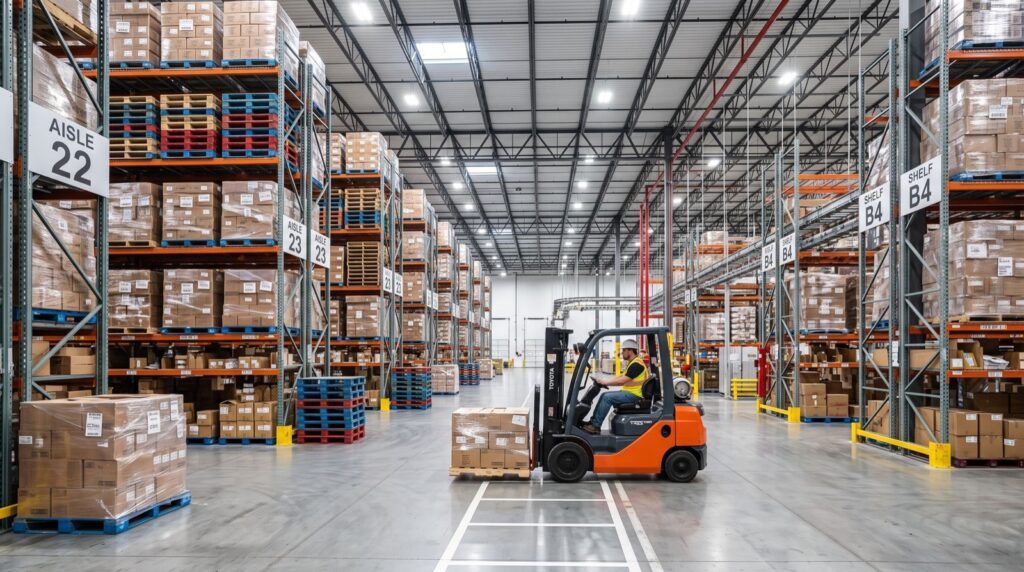
Storage for spare parts in Saudi Arabia is one of the most underrated levers in supply chain performance. When a critical component is missing, a production line stalls, a fleet grounds, or a repair job slips. The difference between a business that recovers fast and one that bleeds downtime often comes down to how well its spare parts are stored, tracked, and retrieved.
This 2026 playbook covers how to organize a spare parts warehouse, what environmental controls sensitive components need, and how to build a system that turns your inventory from a cost center into a competitive edge.
Why Spare Parts Storage Deserves Real Strategy
Spare parts are unusual inventory. They can sit unused for months, then suddenly become the most valuable item in the building. That unpredictability makes them easy to neglect and expensive to get wrong.
In Saudi Arabia, where automotive, industrial, and energy sectors are scaling under Vision 2030, demand for professional Storage for Spare Parts is rising fast. Businesses want fast retrieval, accurate counts, and protection from the region’s heat and humidity, all without tying up prime facility space.
The Hidden Cost of Poor Organization
Disorganized spare parts storage leads to a familiar cycle: staff cannot find a part, so they order a duplicate, which inflates carrying costs. Meanwhile the original sits misplaced on a shelf, aging until it is obsolete. Multiply that across thousands of SKUs and the waste becomes significant.
Environmental Controls for Sensitive Components
Many spare parts are not just metal brackets. They include circuit boards, sensors, seals, and lubricants that degrade in heat, humidity, or static-heavy environments. Matching storage conditions to component type extends usable life dramatically.
| Component Type | Main Risk | Recommended Condition |
|---|---|---|
| Electronic boards | Humidity, static | Climate-controlled, anti-static packaging |
| Rubber seals & belts | Heat, UV, ozone | Cool, dark, ambient storage |
| Metal parts | Corrosion, moisture | Low-humidity, ventilated |
| Lubricants & fluids | Temperature swings | Stable, ambient, sealed |
Electronic components in particular need special care. Facilities offering dedicated Storage for Electronics & Smart Devices provide anti-static handling and controlled humidity that ordinary warehouses cannot match, which is critical for high-value control units and sensors.
Building an Efficient Spare Parts System
A great spare parts operation is built on three pillars: classification, location logic, and traceability. Get these right and retrieval time drops from minutes to seconds.
- ABC classification: rank parts by usage and criticality so fast-movers sit closest to the pick point.
- Fixed vs. dynamic slotting: assign permanent bins for critical parts and flexible zones for seasonal stock.
- Barcode or RFID tracking: every part scanned in and out for real-time accuracy.
- Min/max reorder points: automated triggers so critical spares never hit zero.
A Practical Tip from the Warehouse Floor
Here is an insight most inventory software will not tell you: color-code your storage zones by criticality, not just by category. When a technician is racing to fix a grounded vehicle, a red zone for mission-critical spares lets them find the part on instinct, no lookup required. Pairing visual cues with digital tracking beats relying on either alone.
Outsource or Build In-House?
Many Saudi businesses face a choice: run their own spare parts warehouse or outsource to a specialist. Outsourcing wins when you want to avoid real estate costs, gain climate control on demand, and scale up during expansion without new construction.
When relocating or setting up a new storage arrangement, coordinating the physical transfer with trusted professionals keeps fragile electronics and heavy machinery parts safe during transit. The move is often where damage happens, so plan it as carefully as the storage itself.
Inventory Accuracy and Best Practices
Inventory accuracy is the foundation of good spare parts management. Industry research from bodies like ASCM (Association for Supply Chain Management) consistently links cycle counting and disciplined slotting to lower carrying costs and higher service levels. Apply these practices to keep counts trustworthy:
- Cycle count high-value parts weekly instead of one annual audit.
- Reconcile digital records against physical stock after every large movement.
- Quarantine returned or unverified parts until inspected.
- Review obsolete stock quarterly and clear dead inventory.
Forecasting Demand for Critical Spares
The hardest part of spare parts management is not storage, it is knowing how much to hold. Stock too little and you risk crippling downtime. Stock too much and you tie up cash in inventory that may never move. Getting this balance right is where data-driven forecasting pays off.
Start by separating your parts into demand categories. Fast-moving consumables follow predictable patterns and can be forecast with simple usage history. Critical but rare spares need a different logic: here you plan around the cost of downtime, not usage frequency, because a single failure justifies holding a part that sits unused for a year.
The Downtime Cost Equation
A useful exercise is to calculate the hourly cost of downtime for each machine or asset, then compare it to the carrying cost of the spare. If a production line loses tens of thousands per hour when down, holding a spare that costs a fraction of that is an easy decision. This framing turns spare parts stocking from a gut call into a clear financial calculation that management can support.
Security and Insurance Considerations
High-value spare parts, especially electronics and precision components, are attractive targets for theft and vulnerable to damage. A serious storage strategy accounts for both. When choosing a facility, confirm these safeguards are in place:
- Access control: restricted entry with logged, badge-based access to high-value zones.
- Surveillance: continuous CCTV coverage of storage and loading areas.
- Insurance: clear coverage terms for stored goods against theft, fire, and water damage.
- Fire suppression: systems appropriate for electronics that will not damage sensitive components.
These protections matter most for the parts you can least afford to lose. A control unit that takes weeks to reorder from overseas is worth protecting as carefully as cash. Treat security not as an add-on but as a core requirement when comparing providers.
Frequently Asked Questions
How should electronic spare parts be stored in Saudi Arabia?
Electronic parts should be kept in climate-controlled, low-humidity areas with anti-static packaging. Heat and moisture are the biggest threats, so ambient warehouses without controls can shorten component life significantly.
What is the best way to organize a spare parts warehouse?
Use ABC classification to place fast-moving and critical parts near the pick point, assign fixed bins for essentials, and track everything with barcodes or RFID for real-time accuracy.
Is it cheaper to outsource spare parts storage?
For most small and mid-sized businesses, yes. Outsourcing removes real estate, climate-control, and staffing costs while providing scalable capacity that flexes with demand.
How do I prevent duplicate ordering of parts?
Set min/max reorder points in your inventory system and keep counts accurate through regular cycle counting. When staff trust the system, they stop ordering duplicates for parts they cannot immediately find.
Conclusion
Smart storage for spare parts in Saudi Arabia protects uptime, cuts carrying costs, and keeps critical components ready the moment they are needed. Classify by criticality, match environmental controls to component type, and lean on specialist facilities for electronics and high-value stock. In 2026, the businesses that treat spare parts storage as a strategy, not an afterthought, will be the ones that recover fastest when something breaks.